The Rustic Table
A clearer way for customers to discover the restaurant, explore the menu and make reservations.
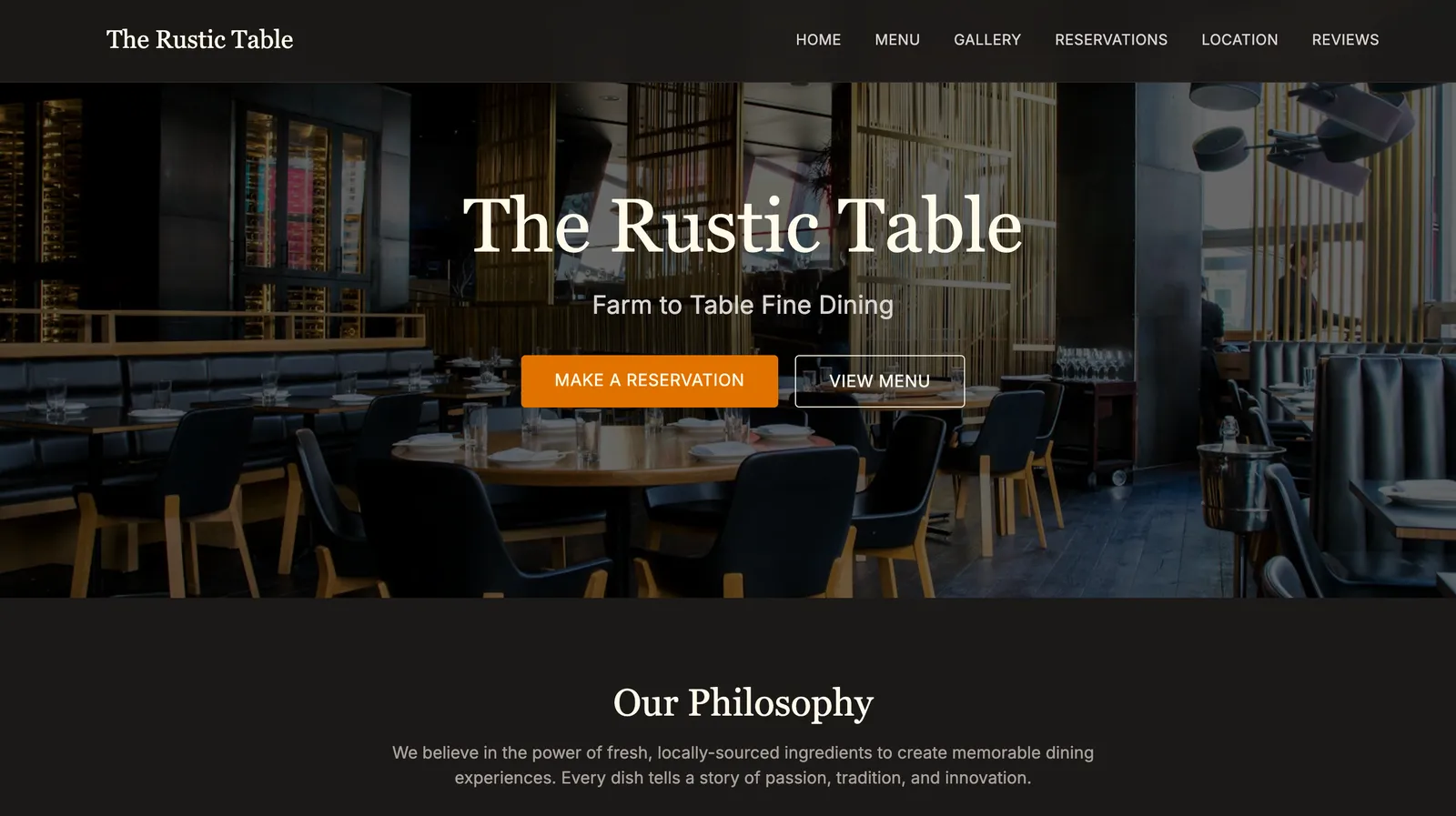
- 01
The situation
The Rustic Table relied heavily on phone calls for customers to understand the restaurant and reserve a table.
People interested in visiting often had to call to answer simple questions:
What's on the menu? What does the food look like? What kind of experience is it? Is there a table available? How can I reserve?
The restaurant had an opportunity to make that entire journey easier before a customer ever picked up the phone.
- 02
What we found
The challenge wasn't simply putting the restaurant online.
Choosing a restaurant is often a quick decision.
Customers want to see the food, understand the menu, get a feel for the place and know that they can actually get a table before deciding where to eat.
Every extra step creates friction.
The opportunity was to turn the restaurant's online presence into a simple journey:
Discover the restaurant → Explore the menu → See the food → Decide → Reserve
- 03
What changed
Restaurant website
Created a dedicated digital presence for the restaurant where customers can discover the restaurant, understand the experience and find the information they need before visiting.
Interactive menu
The menu was brought online so customers no longer have to call simply to find out what is available.
Instead, they can browse dishes and explore the offering before deciding to visit.
Online reservations
Customers can move directly from exploring the restaurant to reserving a table, creating a clearer path from interest to action.
Visual food presentation
Food imagery was given an important role in the experience.
Instead of relying only on names and descriptions, customers can visually understand what the restaurant offers and get a better feel for the dining experience.
Restaurant information
Important details about the restaurant were made easier to discover, giving customers more confidence before making the decision to visit.
- 04
Result
Turning a phone-first journey into a digital one.
The Rustic Table now has a clearer way for customers to discover the restaurant, explore its menu and reserve a table.
Discover → Explore the menu → See the food → Decide → Reserve
For customers, the experience means less effort and fewer phone calls just to understand what’s available.
For the restaurant, it creates a more direct path from online discovery to reservation, while allowing the menu and dining experience to be presented consistently around the clock.
The restaurant gained:
A stronger online presence
An easily accessible digital menu
A clearer reservation journey
Better visual presentation of the food
Less dependence on phone calls for basic information
A digital storefront that can turn online interest into reservations
The result wasn’t just a restaurant website. It gave The Rustic Table a digital experience that helps customers discover the restaurant, understand what it offers and take the next step toward dining there.
Behind the build
- Restaurant content structure
The restaurant's information was organized around the things customers need before deciding to visit — the restaurant itself, menu, food, practical information and reservations.
This turned information that previously required a phone conversation into something customers could explore independently.
- Interactive menu experience
The menu was treated as part of the customer journey rather than a static document.
Customers can browse the restaurant’s offering online and understand what is available before deciding what they want or whether they want to visit.
- Food presentation
Food is one of the strongest decision-making elements for a restaurant.
The visual experience was therefore designed to make the dishes and overall dining experience more tangible, helping customers understand what they can expect before arriving.
- Reservation flow
The reservation experience connects discovery with action.
Rather than browsing the restaurant and then having to find a separate way to make a reservation, the journey leads naturally from interest → menu → decision → reservation.
- Mobile-friendly experience
Restaurant discovery frequently happens while people are away from a desktop — often when they are deciding where to eat.
The experience was therefore designed to make the important information and reservation journey accessible across devices.
- Search & discoverability
The website provides a dedicated online presence around the restaurant and its offering, creating a foundation for customers to discover the business through search rather than relying entirely on direct referrals or phone enquiries.
- Reduced information friction
One of the main goals was to remove unnecessary conversations from the customer's journey.
Instead of:
“What's on the menu?” → Phone call
“Can I reserve a table?” → Phone call
customers can find the information and take action directly through the website.
- Business-ready experience
The website isn't simply an online brochure.
It works as part of the restaurant's customer journey — helping people discover the business, explore the offering, make a decision and reserve.
- The system behind the experience
What looks like a restaurant website is built around a simple business journey:
Discover → Explore → Decide → Reserve → Visit
The result is a digital presence that supports the restaurant before the customer ever walks through the door.
Next in the series
Back to all case studiesHave something worth building?
Whether you're improving something that already exists or creating something new, let's see where it can go.